Electromobility for designers: designing infrastructure that saves energy and money
Article contents
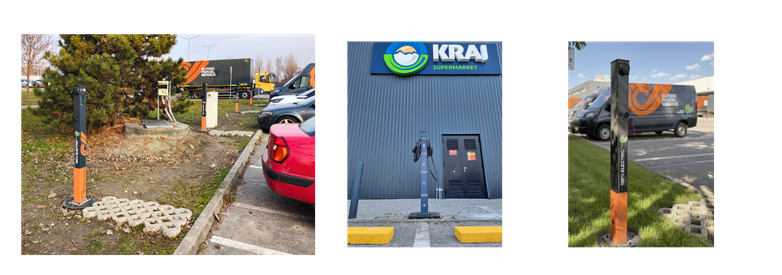
Plan charging around parking time and site capacity. This article explains the design process, while photographs show installation examples. The electrical designer determines dimensions, protection and installation conditions from the selected equipment's documentation.
Electromobility for designers
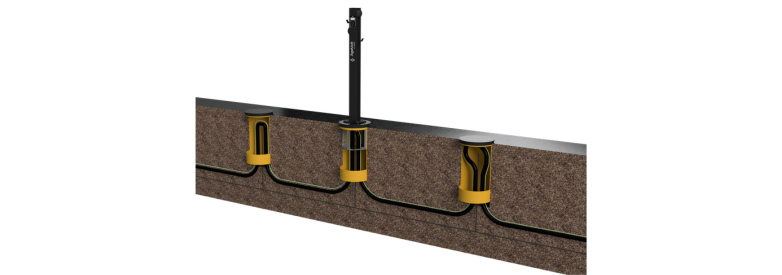
Charging does not require installing every station at once. A looped cable route with branches allows cabling to be prepared and stations added gradually. SmartSystem allocates available power so more vehicles at the same location can charge according to their needs and configured limits.
Determine how much power is available
SmartSystem accounts for limits at several levels: the supply connection, distribution boards and individual branches. Limits are set in amperes or kilowatts. If a branch serves only charging stations, management can use their measurements without an additional SmartMeter. If the supply is shared with a building or other loads, their load data are also needed. Available power can then be allocated without unnecessarily sizing every branch for the sum of nameplate ratings.
Standards and protection
Power management and electrical protection serve different purposes. SmartSystem allocates power. Circuit protection, residual-current devices and other protective components are specified by the electrical installation design.
Station and installation protection: first identify the protection included in the selected station. Then specify protection for the fixed installation and its coordination using the equipment documentation.
Surge protection: consider the whole building, cable routes and connected equipment when locating it.
Data connections: prepare communications for management alongside the power cable route. SmartSystem can connect to compatible building management using Modbus RTU or TCP. Choose the cable type, topology and internet connection for the system's interfaces.
The result is a clear design: power limits, required metering, cable routes, protection and locations for additional stations.
Start with vehicle and site needs
For each charging station, consider how it will be used rather than its nameplate rating. A branch for employees parking all day at an office differs from overnight residential parking or retail visits of 20 minutes to 2 hours. The station may be physically identical, but branch and cable sizing and power settings must reflect expected charging needs rather than maximum power. Audit needs and the electrical network, design energy management system (EMS) rules, then select the cabling concept. EMS keeps the total current on a branch and at the supply connection below the limit.
Higher instantaneous power is useful for short stays. For all-day or overnight parking, spreading charging over time may be sufficient. Priorities allow available power to be assigned first to vehicles such as company cars. Required charging time then depends on the vehicle, battery level and available power.
Compare initial costs with expected usage. Advance preparation lets you spread investment over time and add stations as vehicle numbers grow.
Cabling and site preparation that save money
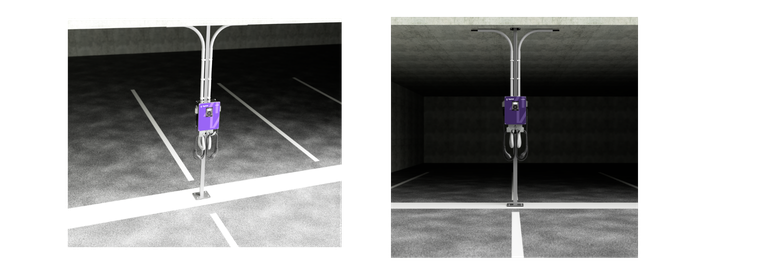
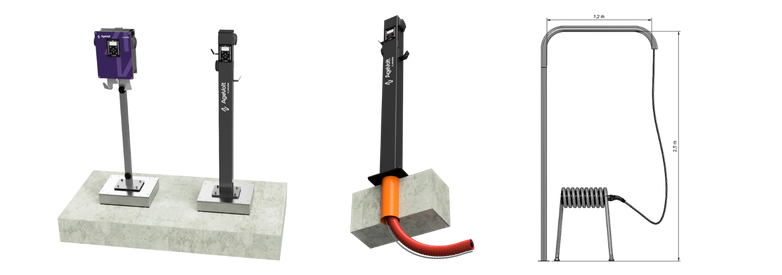
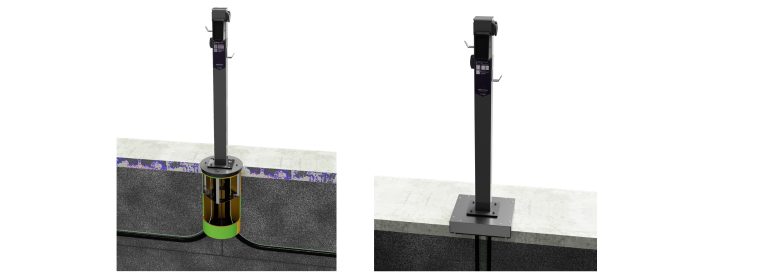
SmartBase provides underground cabling space, SolidBase is used on a solid surface, and GarageBase is a junction box for garage wiring. With suitable preparation, another station can be added at a prepared location without repeating the entire cable route.
Reserved capacity and operating costs
Spreading charging over time helps use existing capacity and reduce demand peaks. Compare measured demand, tariffs and energy needs during design. Select price-based or time-based modes from the supplied control unit's functions.
Documents for designers
Documentation for stations, bases, metering and management helps prepare drawings and component schedules. Select documents for the model and installation. For drawings, also use the CAD symbol library.
AgeVolt supplies stations, management and documentation for designers. We can help with design and commissioning or support your electrical designer and installer. This prepares your solution for today's vehicles and future expansion.
Would you like more information about designing electric vehicle charging infrastructure? Arrange an online call or an in-person meeting with us.
Samuel Sprušanský
samuel.sprusansky@agevolt.com
+421 948 364 084